Every HimHub formulation is considered through a simple lens: the patient concern it addresses, the role of its ingredients and the quality standards expected of the finished medicine.
Purposeful formulations
Every ingredient should have a defined role within its approved formulation
Clear product information
Practical information on product purpose, composition and appropriate use
Responsible claims
Product information grounded in the approved label and supported therapeutic purpose
Accessible quality reports
A QR code on the carton helps people access available product quality documents
Our commitment: Thoughtful formulations, responsible manufacturing and transparent product information
GMP
ManufacturingGMP-certified manufacturing partner
QR
Quality accessProduct-linked quality reports
AYUSH
Responsible careUse within approved product indications
Our products
Ayurvedic solutions for defined care needs
Explore our Ayurvedic product range for distinct healthcare needs
Anorectal care
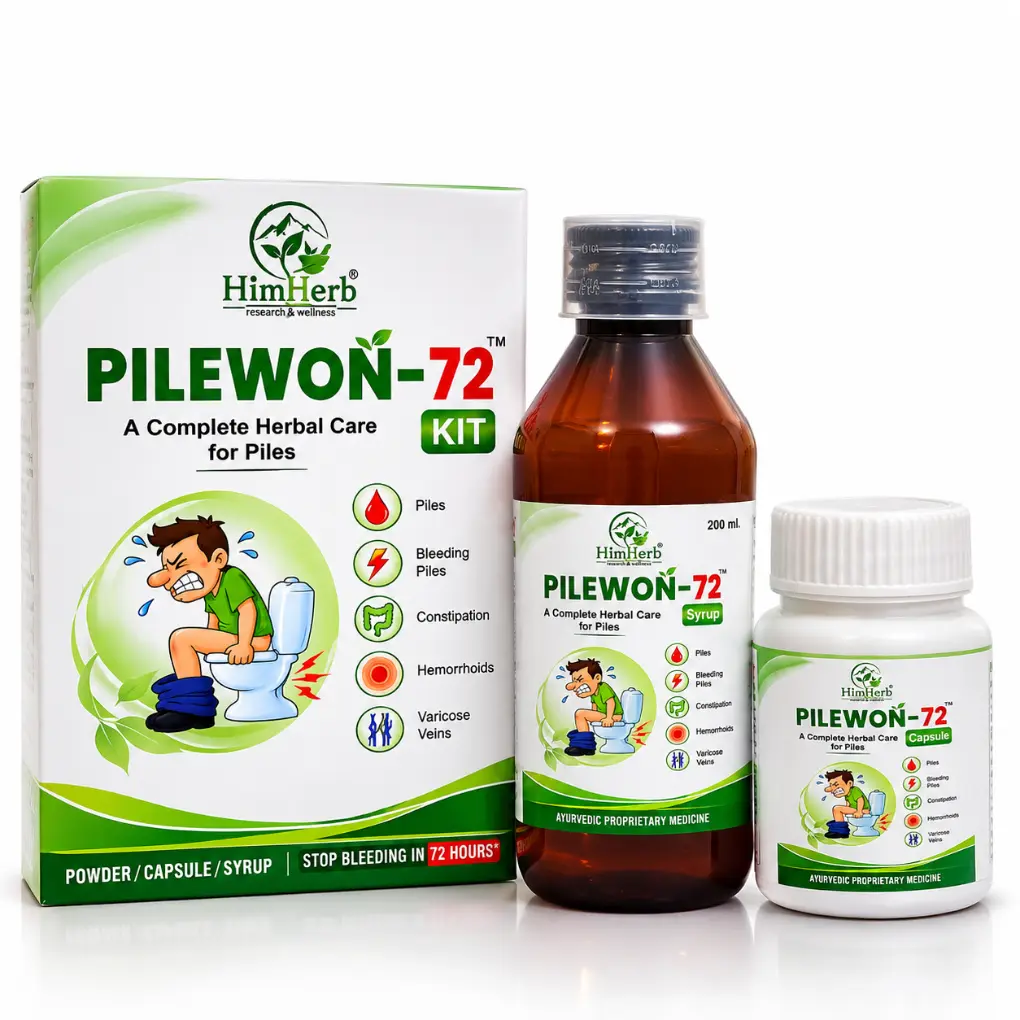
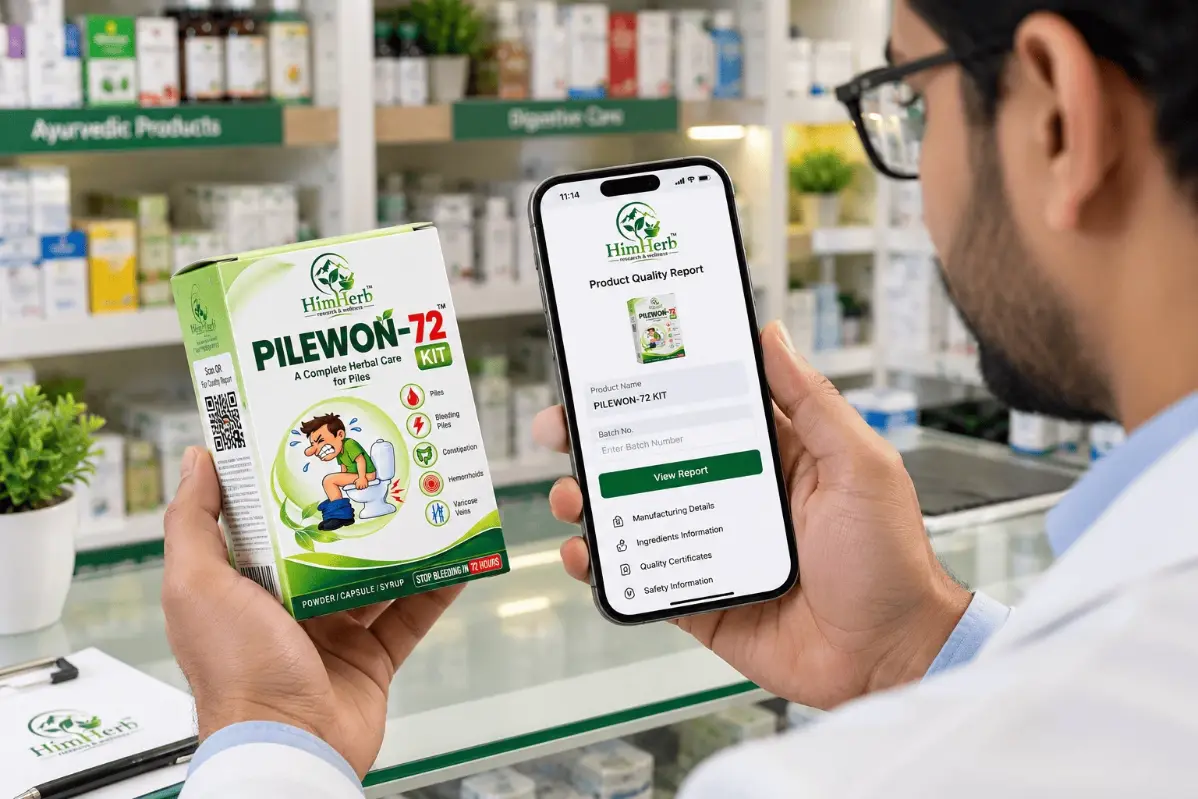
Pilewon-72 Kit
A combined powder, capsule and syrup kit for physician-guided supportive care of piles, fissures and constipation-related discomfort.
•Powder, capsule and syrup format in one kit
•Focused on bowel regularity and anorectal comfort
•Use according to its approved label and medical advice
Manufacturing tie-upsManufacturing partnerships guided by formulation integrity and quality standards
Quality documentationScan the QR code on a product pack to review available quality information
Quality & manufacturing
Quality built into every step
From formulation to finished batch, we focus on quality at each stage
01
Rational product approachWe select products around defined therapeutic purposes and licensed formulation information.
02
Quality-focused manufacturing partnershipOur products are manufactured through a GMP-certified manufacturing partner in Haryana, as identified in the supplied product information
03
AYUSH-regulation aligned thinkingFormulations and product information follow the applicable AYUSH licence and approved product label
04
Patient-centred product purposeOur products focus on specific patient needs, appropriate use and reliable product information
The HimHub commitmentThoughtful formulations, quality-focused manufacturing and accessible product information.
QR quality verification
Product quality information, one scan away
Each pack can connect doctors, chemists and patients to its associated quality-report information through a simple QR scan.
Step 01Find the QR code on the medicine box
Step 02Scan with a smartphone in seconds
Step 03Open the linked quality-report screen for product review
View available quality reports directly from the product pack
Product availability, batch quality documents, or professional enquiries
For questions about this information, contact HimHub Research & Wellness at himherbresearch@gmail.com. Refer to the current product packaging and approved directions for medicine-specific information.
Purpose and acceptance
These terms explain the use of this HimHub Research & Wellness website, the limitations of its information, and appropriate ways to contact the company. By navigating this site, you agree to use it for lawful, informational purposes. These terms do not replace statutory rights, prescriptions, the approved medicine label, a professional consultation, or any separately signed commercial agreement. Please read the relevant sections before depending on product descriptions, quality reports, or promotional content. If you disagree with a term, discontinue use and contact the company for clarification rather than assuming that silence creates an exception.
Website information
The website introduces the company, its product categories, its formulation philosophy, selected manufacturing information, and a proposed means of accessing available quality reports through carton QR codes. Material may change when a product label, licence, manufacturing arrangement, report format, or regulatory direction changes. Photographs, illustration graphics, design representations, and dummy cartons are illustrative unless identified as the approved product artwork. A picture on the website should not be used to identify a genuine medicine, assess tampering, determine the batch, or confirm ingredients. The current physical label, insert and legally approved product particulars are controlling references.
No individual medical service
The company website is not a telemedicine clinic, emergency helpline or independent diagnosis service. Product descriptions, therapeutic categories, and traditional ingredient information are general orientation only. No website section should be read as an individual treatment plan or endorsement of use for a specific patient. A qualified practitioner must assess symptoms, pregnancy or lactation, allergies, age, kidney or liver problems, other medicines and individual medical history. Emergency signs, including respiratory distress, major bleeding, inability to urinate, severe pain, confusion or loss of consciousness, require urgent medical attention rather than email correspondence.
Medicine safety and permitted claims
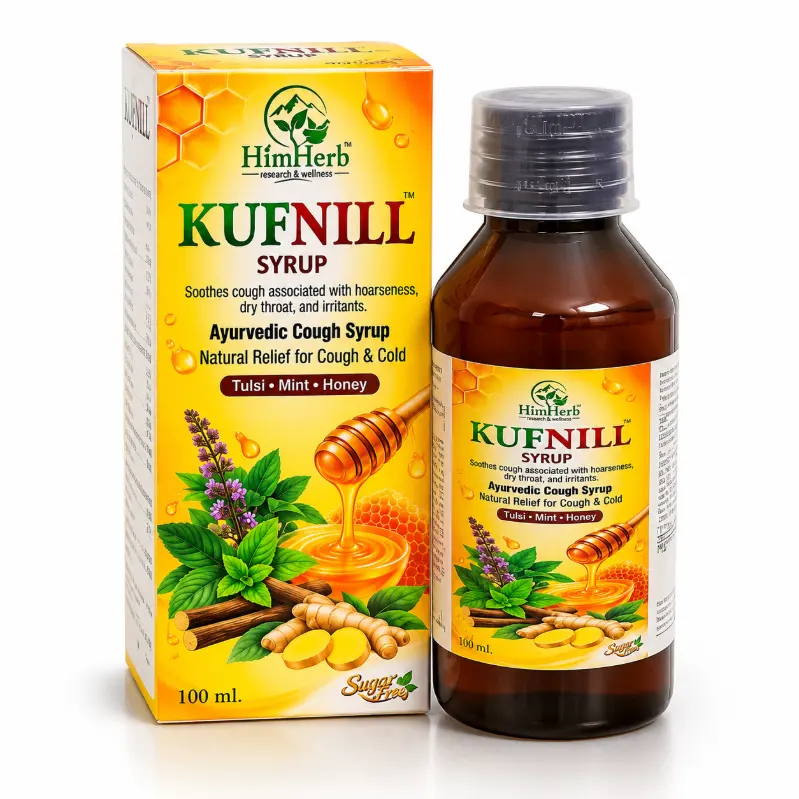
Ayurvedic proprietary medicines may include pharmacologically active substances, and not every ingredient is appropriate for every person. Never infer safety merely from words such as natural, traditional, herbal or Ayurvedic. Follow the manufacturer's approved label, usage instructions and medical advice. Do not exceed quantities or combine products without professional review. KUFNILL syrup is identified in the supplied product information as containing Dhatura; the caution that it is to be taken under medical supervision must remain prominent. Any mismatch between a webpage and packaging should be reported to the company. Published wording must be checked against licensed indications before use.
Quality reports and verification
Where product QR codes connect to quality information, the scan provides a route to the report or record associated with that specific product or batch. A visible document, even one issued by a recognized laboratory, must be interpreted within its scope: it may confirm selected test results for a sample, date and batch rather than guarantee every conceivable quality attribute or clinical outcome. Scanning a code does not substitute for checking batch identifiers, physical packaging, expiry, storage conditions or product authenticity. A broken link, missing report, changed URL or inconsistent batch number should be raised with company support.
Acceptable use and security
You agree not to use the website to publish unlawful material, conduct automated scraping that harms service performance, impersonate medical or regulatory authorities, copy or alter product quality documents, distribute misleading screenshots, interfere with QR links, probe security settings without permission, or use brand assets to create counterfeit products. The company may restrict misuse where reasonably necessary and permitted by law. Ordinary research, personal reading, accessibility tools and good-faith contact are permitted. Please disclose a suspected security issue responsibly by email without publishing confidential information, compromising a service, or attempting to access a different user's data.
Intellectual property and media
Company names, product names, copy, drawings, artwork and identity elements may be protected by applicable intellectual property rights. You may read and share a direct link for legitimate informational use but must not imply sponsorship, medical endorsement, distributorship or approval without authorization. Third-party images and stock footage remain governed by their respective licences. The current website preview uses illustrative carton designs; they are not verified or official pack reproductions. Any actual launch should replace them with the final approved product artwork and verify permissions for stock footage, photography, fonts and any external content that remains embedded.
External links and contact
Email and telephone links can open services operated by other providers. A link to a laboratory report, map, downloadable document, platform, website or communication service does not mean the company controls the security, availability or accuracy of that external provider. Review the external site's own terms and privacy notice when appropriate. For product questions, write to himherbresearch@gmail.com or contact the phone number printed in the website footer; use the current company pack when reporting a quality complaint. Avoid sending sensitive medical details through ordinary email unless necessary and appropriate.
Commercial matters and updates
This informational site does not itself complete a purchase, promise product stock, set final trade prices, appoint a distributor or create an employment relationship. Any quotation, order, appointment, payment, supply, shipment or commercial commitment must be separately confirmed by authorized representatives. Wording and availability can be revised or withdrawn without turning a prior draft into a contractual warranty. Terms may be updated to reflect legal requirements and actual business operations. Material changes should be reviewed by company management and qualified legal professionals before they become operative on a public website.
Governing considerations and disputes
Applicable Indian law, mandatory consumer protections, healthcare advertising rules and sector-specific licensing requirements govern use of this information. Nothing here attempts to exclude rights that cannot lawfully be excluded, or to waive responsibilities imposed by product safety and consumer law. Contact HimHub with an issue and enough non-sensitive details to identify the page or product; the company should investigate and respond through a documented channel. If the issue cannot be resolved informally, lawful remedies remain available subject to the facts and applicable jurisdiction. This draft does not specify exclusive courts without company legal review.
Accuracy corrections and version history
If you believe a company statement is inaccurate, identify the exact page and the current carton or document you used for comparison. Do not make a medical decision from a disputed passage. The company should review the evidence, correct the wording where justified, document the date of change, and assess whether affected links or quality reports require updating. This approach protects both users and authorized teams from relying on old promotional summaries. It also reduces misunderstandings where cartons printed at different times show legitimately updated information subject to licensing requirements.
Using feedback responsibly
We welcome clear, documented feedback about website accessibility, link quality, inaccurate product language or misuse of branding. When writing, identify the page, describe the expected correction and attach only material that you are authorized to disclose. The company should not publish names of people who make a complaint without an appropriate basis. A response may involve checking a current approved pack or consulting manufacturing and medical reviewers. Feedback does not create a confidential professional relationship by itself, and the company cannot guarantee a specific outcome from any routine website message. It is useful to keep a copy of important correspondence, particularly if it concerns a specific batch or an adverse reaction. Do not use social media comments as a substitute for an urgent safety notification or formal complaint channel.
For questions about this information, contact HimHub Research & Wellness at himherbresearch@gmail.com. Refer to the current product packaging and approved directions for medicine-specific information.
Scope of this notice
This privacy statement is for visitors reading HimHub Research & Wellness company and product information online. It explains what information may be generated by routine browsing, the current site's contact links, external media, and a future QR quality-report interface. It does not describe patient records held by healthcare providers, the records of independent chemists, or data collected by third parties on other websites. The information below is a policy draft for review; it should be matched to the final hosting platform, analytics configuration, QR service and contact workflows before publication.
Information given voluntarily
A visitor may choose to contact the company by email or telephone. When doing so, information provided may include a name, contact details, message content, the product being discussed, a batch number or a report-access question. Please provide only information necessary for your enquiry. Do not include full prescriptions, photographs of medical records, government identity documents or sensitive health information unless the company has expressly offered a suitable secure channel and explained how those details will be handled. A contact action initiated in your email or dialer takes place in that application, not automatically in this static website.
Routine technical information
Internet services normally receive technical information required to deliver pages, including IP addresses, approximate device characteristics, user-agent information, request paths, timestamps, and performance or security events. What is recorded and how long it is retained depends on the final hosting provider and settings. This local HTML preview has no custom database, account registration or server-side submission form. It does include external font, photographic and video resources, so accessing those resources may create network requests to their providers. A published site should document its actual server logs, access controls, retention settings and any analytics tools.
Why information would be used
Contact details would be used to respond to product enquiries, explain how to locate approved information, investigate legitimate quality or authenticity concerns, fulfil reasonable requests, and maintain necessary communication records. Basic technical data may be required to deliver the website, prevent abuse, investigate outages and protect the service. Where consent is required, marketing or optional analytics use should not proceed without the relevant consent mechanism. Personal data should not be repurposed for unrelated marketing merely because a visitor used a QR code or asked a quality question.
QR and quality-report access
A QR code can direct a visitor to product-level or batch-level documents. Ideally, ordinary access to a public quality report should not require the visitor to create a profile, provide a phone number, enter health history or submit unnecessary identity details. A production system may maintain limited technical logs for security, rate limiting and troubleshooting; any such logs, their duration and their purpose should be documented. The report may contain manufacturing or laboratory records, but that does not itself require collecting the patient’s medical data. If access changes to require identification, the privacy policy and interface must be updated before activation.
Third-party services
The preview may request video from Pexels, images from stock-photo hosts and web fonts from Google. Those vendors may receive internet connection details when their resources are loaded, and their terms and policies govern how they handle them. If the final website uses a map, payment gateway, form processor, CRM, cloud storage service, embedded video or analytics software, each integration should be assessed and disclosed. External links should not silently copy private contact data from HimHub into another service. Where appropriate, use privacy-preserving settings, local hosting for frequently used assets and clear user choices.
Data storage, access and retention
The company should keep only information necessary for the stated purpose, store it in approved systems, limit access to authorized personnel and review retention periods based on legal, quality-assurance and operational needs. Enquiries about medicine quality may need traceable follow-up records, while ordinary informal messages may not require the same duration. Sensitive files should not be placed in a public website directory. Use authentication, encryption in transit, secure backups, access review and deletion procedures proportionate to the data held. No specific retention promise is made here because the final business systems and legally required periods have not been confirmed.
Choices and rights
Visitors should have a practical way to ask whether relevant personal information is held, correct a contact detail, request deletion where legally and operationally possible, object to inappropriate marketing, and seek an explanation of how data is used. Applicable rights and exceptions depend on Indian law and the type of record involved. The company should verify that a request comes from the relevant person before disclosing details. Some records may need to be retained for legal, quality, complaint or audit reasons. Requests may be addressed through the contact information shown at the bottom of the website.
Children and health information
The website does not need to solicit personal information directly from children to provide generic product information. Parents or guardians should supervise access where appropriate, and medicines must be used according to their labels and professional advice. Information about a child's symptoms or treatment should not be published in a form submission or informal social media message. Healthcare-related information is more sensitive than routine browsing data; the minimum necessary information and secure communication should be the default. Do not send urgent medical information through this website, and do not wait for an email reply during an emergency.
Updates, accountability and contact
This notice must be revisited before public launch and whenever the site adds forms, cookies, marketing campaigns, visitor accounts, a production QR portal, hosting changes, or new data processors. A dated update log is recommended so visitors can understand meaningful changes. If a specific legal notice, grievance officer detail, consent interface or data-protection procedure is required by applicable law, it must be added after company review. For privacy enquiries, contact himherbresearch@gmail.com and identify the request without including unnecessary personal data. The company should document responses and correct inaccurate or outdated disclosures.
Data minimization in practice
The safest routine approach is to ask only what is necessary for the action a person wants to perform. A visitor seeking a public quality report should not need to provide medical history. A distributor enquiry may need business contact details but not a patient identifier. A quality complaint may require the product batch and contact details so the matter can be investigated, but unnecessary images of identity cards or prescriptions should be avoided. Staff should have clear rules for secure sharing, deletion and response to requests, and the company should select vendors that support those controls.
Communicating securely
Email and telephone channels are convenient but have different privacy properties. A visitor should confirm the recipient address and limit what is shared. The company should use secured workplace accounts, appropriate permissions, phishing awareness and a defined process for routing a message to the right staff member. A QR page should never invite a visitor to upload medical records merely to access a routine public report. If a separate patient support service is offered later, it needs its own purpose statement, privacy safeguards, access policy and lawful basis for processing. Visitors can reduce exposure by using trusted devices and avoiding public disclosure of batch-linked personal treatment details.
For questions about this information, contact HimHub Research & Wellness at himherbresearch@gmail.com. Refer to the current product packaging and approved directions for medicine-specific information.
What cookies are
Cookies are small pieces of information a website or third-party service may store through a browser. Related technologies include local storage, session storage, embedded scripts and similar browser identifiers. Some are necessary for a website or security feature to operate; others help measure usage or deliver marketing. The visitor’s choices depend on the technologies used. This page explains the intended distinction and the decisions that should be reviewed before HimHub’s full production launch. It should not be treated as a claim that every possible third-party technology is already configured or absent.
Current HTML preview
The local standalone HTML version is primarily an informational presentation. Its own JavaScript controls navigation, product filters, a rotating hero headline, policy dialogs and a non-scannable QR illustration; these interactions do not require saving a visitor profile or setting a custom advertising cookie. However, the preview also references online video, fonts and images. Loading those resources may contact external hosts that have their own technical processing and cookie rules. An actual deployment will also generate normal server logs. Inspect the production network traffic before making any categorical claims about cookie-free operation.
Strictly necessary technologies
Some websites rely on short-lived cookies or equivalent mechanisms for security, load balancing, spam prevention, accessibility preferences or consent storage. If such functions are added to the HimHub site, they should be limited to what is genuinely necessary, documented by purpose and lifetime, and protected against unauthorized access. Essential technologies should not be quietly used for advertising or unrelated profiling. Any login system for manufacturers, administrators or report-upload staff should be architecturally separated from the public visitor experience and should use secure cookie attributes and access controls.
Optional analytics
Visitor analytics can be useful for understanding whether mobile navigation is working, which product information attracts interest, and whether a QR report page loads successfully. They can also create privacy obligations. If analytics is added, the company should choose an appropriately minimal configuration, avoid gathering health-related search or QR information unnecessarily, disable sensitive event data, restrict access to reports, and define a retention period. Where consent is required, tracking should wait until a visitor chooses it. Do not use product scans to build health-interest advertising audiences without a lawful basis and transparent information.
Video, fonts and third-party media
The animated hero may use remote Pexels stock video and the design may request Google Fonts or remote photographs. These resources are visually useful but can cause the browser to contact external domains before the visitor clicks anything. Their providers can receive technical request information independently of HimHub. A production build can reduce reliance on outside requests by hosting licensed video, images and font assets on controlled infrastructure, compressing media and using a static poster until playback is permitted. Designers should confirm the media licence, usage permissions and browser performance, especially on low-bandwidth phones.
Managing browser preferences
Most browsers let users block selected cookies, clear stored information, limit cross-site tracking or inspect site data. Disabling all browser storage can affect login, preference retention, security mechanisms and some embedded components on many websites. Visitors can also disable auto-play or choose data-saving modes; the HimHub page should remain understandable with a static hero image. Browser privacy settings may differ by platform and version. The website should not present a decorative cookie banner that claims to control technologies it does not actually control; any consent controls must be connected to the underlying scripts.
How consent should work
For a public production version that uses optional trackers, a transparent preference panel should distinguish essential functions from analytics and marketing. Optional categories should be off until an affirmative choice is recorded where applicable. The control should explain purposes and provide a straightforward way to refuse or change preferences later. Repeated refusal should not make the site unusable. Buttons must have clear labels, work on small screens and support keyboard navigation. If the final site avoids nonessential tracking entirely, a large consent overlay may be unnecessary, but the policy must still describe actual third-party network requests accurately.
Retention and deletion
Browser storage periods should match a defined functional need. A short security session might last only while a visitor is active, whereas a preference record might persist until changed or deleted. The final duration for each cookie should be listed once the hosting and analytics setup is known. Where information is stored only in a visitor's browser, clearing browser data may remove it. Server-side records, if any, require separate deletion and retention rules; clearing a cookie does not automatically remove records held elsewhere. Report-access logs should not be retained indefinitely without a legitimate documented purpose.
Security and accessibility
Cookies connected to authentication or sensitive administrative processes should use secure, HTTP-only and appropriate same-site protections. Sites should use HTTPS when published and prevent scripts from reading data they do not need. Consent interfaces should not obscure medicine warnings, product labels or critical site navigation. Text must remain legible at mobile sizes and should not rely solely on color to communicate choice. Visitors using assistive technology must be able to open and dismiss cookie information and adjust preferences. The design should continue to function when animation is reduced or when third-party video fails to load.
Policy maintenance
This draft describes a responsible approach rather than a completed cookie audit. Before publishing the domain, the company or developer should run browser tests in a fresh session, identify all network requests and storage entries, list providers and purposes, and confirm which technologies need consent. The policy must be updated when advertising tags, analytics, a chatbot, embedded maps, QR verification accounts or payment features are introduced. Questions about cookies and site privacy can be addressed to himherbresearch@gmail.com. Any published cookie table should be based on measured behavior, not estimates or generic examples.
Testing mobile and embedded-media behavior
Cookie and storage testing should be repeated on Android and iOS browsers and under realistic conditions such as blocked third-party media, private browsing, weak connections and disabled cookies. The page must remain useful when video does not autoplay, and it should not lock product information behind an optional tracking choice. Audits should also test links opened through QR scanners because they may use embedded browser views with different storage behavior. Document which first-party and third-party domains are contacted before and after any user selection, and remove unnecessary requests before launch.
External website links
When visitors follow a link away from HimHub, the destination site may use its own cookies and preferences. The original site's cookie settings may not apply to that destination. A website footer can provide useful navigation to external licences or stock-media sources, but the company should not imply that it controls their data practices. Before embedding any new third-party widget, assess whether a plain text link would be sufficient. A simple link often reduces page weight, improves speed and minimizes unnecessary technical disclosures. Any live cookie notice should reflect actual current operation rather than generic text copied from unrelated websites.
For questions about this information, contact HimHub Research & Wellness at himherbresearch@gmail.com. Refer to the current product packaging and approved directions for medicine-specific information.
Educational scope only
Information on the website describes selected Ayurvedic proprietary medicines and HimHub's general product approach. It is intended to help users recognize products and access company information, not to diagnose disease, recommend a personal treatment, or replace a licensed healthcare professional. Disease terms and product categories do not mean that every condition is an approved indication for a particular brand. Every product must be reviewed against its current approved label, indication, formulation and licence. Promotional language does not override regulatory requirements. Individual decisions about treatment should be made by a qualified healthcare professional who knows the patient's circumstances.
No promise of cure or specific outcome
References to supportive care, comfort or therapeutic intent do not guarantee that a product will cure, prevent or improve a particular illness. Traditional use, theoretical ingredient action and evidence for a single constituent should not automatically be treated as proof of effectiveness for the finished multi-ingredient product. Different patients may respond differently, and symptoms can have causes that require investigation. The website should not be interpreted as making an absolute efficacy, superiority, zero-side-effect or risk-free claim. Any product-specific clinical evidence, if presented in future, should identify its actual study population, formulation and measured outcome accurately.
Physician review and correct use
Read the complete current pack information before taking a medicine. A healthcare professional should consider age, pregnancy, nursing, allergies, medical conditions, medications, laboratory results, duration of illness and any restrictions that apply. Do not increase the dose to obtain faster relief. Do not give adult products to children by estimating a smaller dose. When a medicine is prescribed for a specific condition, follow that prescription rather than a generalized webpage summary. If a dosage on the website differs from the physical approved pack, contact the company or prescriber for clarification before using it.
Special caution for KUFNILL
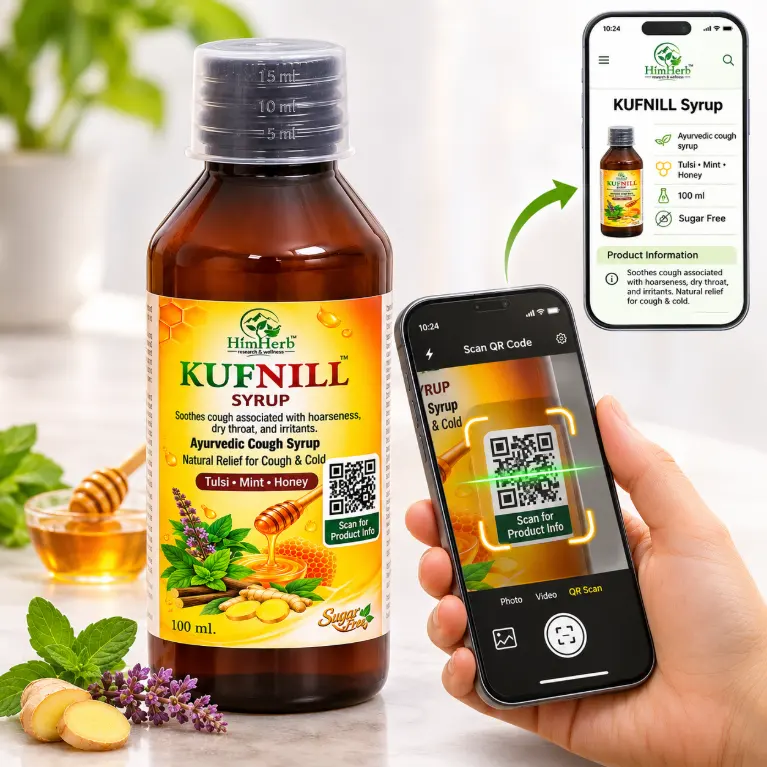
The supplied KUFNILL syrup information includes Dhatura, an ingredient requiring particular caution for internal use. The medical-supervision warning must be visible and treated as substantive: this product should be taken under medical supervision. Unwanted effects may include drowsiness, dry mouth, dizziness, blurred vision, rapid heartbeat or difficulty passing urine, and excess exposure may be dangerous. It should not be treated as an ordinary over-the-counter beverage or a medicine to share casually. Children, pregnant or breastfeeding individuals and people using interacting medicines require careful professional assessment. Suspected overdose, seizures, confusion or breathing problems warrant urgent care.
Renal and urinary symptoms
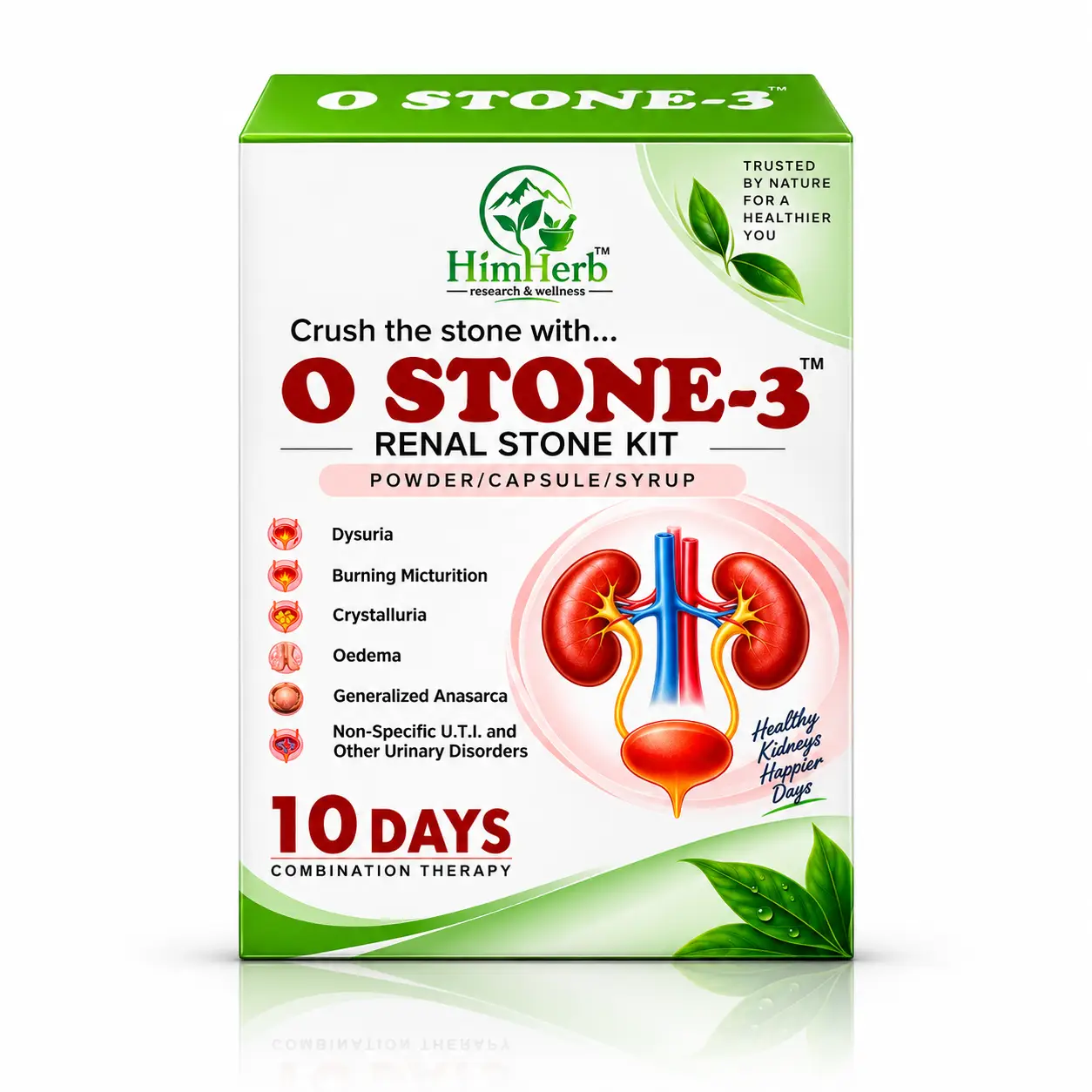
Urinary complaints and suspected renal stones can indicate infections, blockage or other disorders that need timely testing. A product described as urinary support should not delay professional evaluation for high fever, chills, persistent vomiting, severe flank pain, visible blood in urine, inability to pass urine or major swelling. Fluid advice must be individualized for people with kidney or heart conditions or prescribed fluid restrictions. A kit combining powder, capsule and syrup is not a substitute for medical investigation, imaging or emergency treatment when required. Review the current approved O STONE-3 label and the treating clinician's directions.
Women’s health considerations
Irregular menstruation, unusually heavy bleeding, pelvic pain and similar concerns can have multiple causes. They may require pregnancy assessment, examination, investigations or management that is not addressed by a general herbal product description. Do not use a gynaecological supportive-care product to self-treat unexplained bleeding, severe pain or suspected pregnancy complications. Individuals who are pregnant, trying to conceive, breastfeeding, anaemic, taking hormonal medicines, or using anticoagulants should seek qualified medical advice before taking a product. The CYSTOHEAL description must stay within its licensed indications and should not be presented as a proven treatment for cysts, fibroids or infertility without adequate product-specific evidence.
Piles, fissures and digestive symptoms
Piles, anal fissures and constipation-related discomfort may benefit from individual treatment plans, but rectal bleeding and pain can have causes that need proper diagnosis. Persistent heavy bleeding, severe pain, dark stools, unexplained weight loss, anaemia, major bowel changes or a suspected abscess are not suitable for self-diagnosis based on a product page. A PILEWON-72 kit does not remove the need to consider diet, fluids, bowel habits, other medicines and underlying conditions. Avoid interpreting general supportive statements as a guarantee of bleeding control, rapid cure or avoidance of procedures. Seek appropriate advice if symptoms persist.
Reactions, interactions and quality
Herbal does not automatically mean free of allergies, interactions or adverse effects. Stop using a product and seek appropriate professional care if a serious reaction is suspected. If possible, keep the packaging, batch number, invoice and dosage details so the manufacturer and clinician can investigate. A quality report may document testing of a specified batch or sample, but it cannot establish whether a product is appropriate for a given person or whether the patient will have a particular clinical response. Correct storage, genuine supply channels, expiry checking and avoidance of tampered packs remain essential.
Emergency warning signs
Seek immediate care for severe breathing difficulty, chest pain, fainting, seizures, uncontrolled bleeding, severe confusion, suspected overdose, severe abdominal or flank pain, inability to urinate, severe allergic reaction or other rapidly worsening symptoms. Do not wait for the company to answer an email, open a QR link or confirm a test result. A website cannot assess real-time clinical deterioration. For less urgent concerns, consult a qualified healthcare professional and explain exactly which products and medicines are being used. If a symptom might be associated with a product, preserve useful evidence for adverse-event assessment without delaying treatment.
Product label and regulatory review
Details of composition, ingredient identity, plant part, strength, indications, dose, warnings, manufacture, lot number and expiry must match the current approved product particulars. The uploaded leaflets used to prepare this preview include some incomplete or uncertain ingredient identities, so a final consumer-facing ingredients page must not silently fill those gaps or invent a formula. Use actual pack photography only after approval. Site content should be reviewed regularly by an appropriate medical or regulatory reviewer, particularly before product claims are added or rewritten. For product questions or suspected adverse reactions, contact the company and an appropriate healthcare professional.
Responsible product education
A company can provide meaningful education without overstating evidence. Useful content explains the medicine's approved purpose, the role of professional guidance, the need to read the label and warning signs that need evaluation. Avoid replacing a qualified practitioner's judgment with checklists that imply a diagnosis. Educational material should distinguish traditional pharmacological rationale from clinical evidence for the exact marketed combination. If new research becomes available, it must be accurately interpreted before revising public copy. In the event of a regulatory update or safety concern, the company should revise relevant product pages promptly and consistently.
Communication with pharmacists and doctors
A pharmacist or doctor may ask for product details, warnings, batch information and the basis for the approved indication. Information supplied through this site should help direct that person to current official documentation. It should not present clinical terminology as proof where no product-specific clinical evidence has been supplied. If a healthcare professional makes an independent recommendation, that does not turn the website into a medical provider or establish that every indication discussed is licensed. Report concerns about inaccurate descriptions so the company can investigate. Above all, medically significant symptoms should be assessed through appropriate clinical services, not delayed for a product enquiry response.
For questions about this information, contact HimHub Research & Wellness at himherbresearch@gmail.com. Refer to the current product packaging and approved directions for medicine-specific information.
Start with the physical pack
Every use decision should begin with the correct product, intact original packaging and its current approved label. Check the brand name, manufacturer, batch number, expiry, container seal, ingredient declaration, dosage form and relevant cautions. Marketing descriptions on a website may be shorter than legally required pack instructions. When details differ, ask a qualified professional to reconcile them before taking the medicine. The illustrations here show design concepts rather than approved packaging, so their appearance should never be used as an authentication method. Keep the package until the course is complete so the relevant details remain available.
Speak to a qualified practitioner
Inform the healthcare professional about current symptoms, their duration, allergies, pregnancy or breastfeeding status, known kidney or liver conditions, and all regular medicines or supplements. Mention other cough preparations, sedatives or medicines that can cause drowsiness if considering KUFNILL. Mention fluid restrictions if considering a urinary-support regimen. Share heavy bleeding or persistent pelvic pain concerns before considering a women’s health product. A practitioner can assess whether supportive Ayurvedic care is appropriate, whether tests are needed and what warning signs require urgent treatment. Avoid self-medicating with multiple combination products merely because they are marketed together.
PILEWON-72 kit overview
The source leaflet describes a kit containing powder, capsules and syrup for supportive care related to piles, fissures and constipation. The supplied usage schedule includes powder in the morning and capsules plus syrup later in the day. Actual directions must be taken from the final approved pack or prescriber, because dose, spoon capacity and formulation may be product-specific. Do not assume a shortened web description is sufficient to measure an oral dose. Persistent rectal bleeding, severe anal pain, black stools or worsening symptoms require assessment. A clinician may also advise changes to bowel habits, fibre intake, hydration and other treatment measures.
O STONE-3 kit overview
The supplied O STONE-3 literature describes a powder, capsule and syrup combination with a stated ten-day regimen. The first powder step is described separately from later capsules and syrup, so it is important not to confuse the sequence or repeat a first dose without instructions. The source documents do not provide the complete approved ingredient formula for all three components. For that reason, the website should not substitute an assumed composition or a similar market formula. Patients with severe or ongoing urinary symptoms need evaluation and should follow any prescribed fluid restriction rather than generic water-intake advice.
CYSTOHEAL combo overview
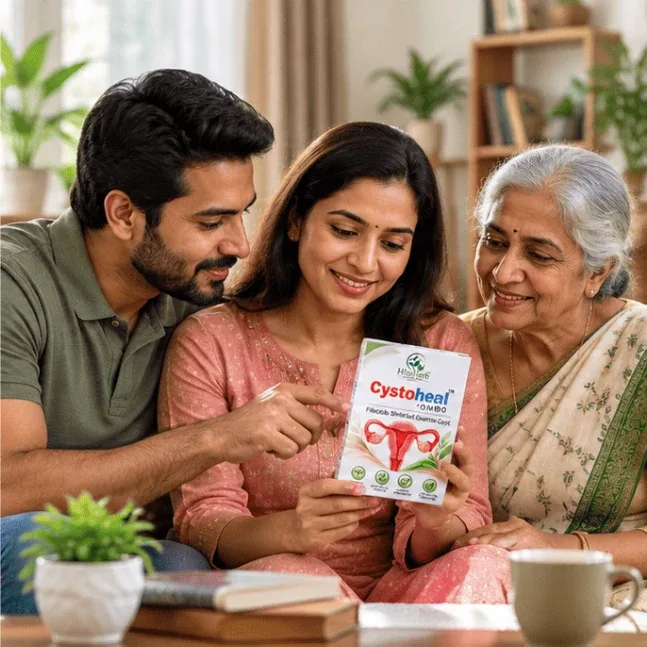
The source information describes an Ayurvedic syrup and capsule product used under professional guidance, with a morning capsule dose and syrup at later times. The longer leaflet also contains ingredient names and identities that require formulation-level confirmation. The final label and professional direction take priority over a website summary. Persistent pelvic pain, irregular or very heavy bleeding, fainting, severe anaemia or possible pregnancy complications should be investigated promptly. Avoid interpreting the product name as proof that it treats every cyst-related condition. Clinical suitability and medicine interactions require individual assessment, particularly in pregnancy, lactation or while taking hormonal medication.
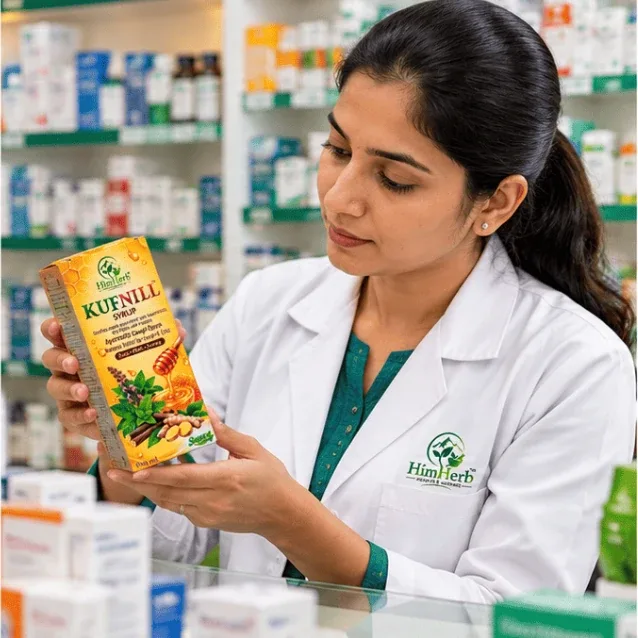
KUFNILL syrup overview
KUFNILL is described in the uploaded literature as an Ayurvedic cough syrup. The source specifies Dhatura as a formulation ingredient and states that use must be under medical supervision. Follow only the approved label and prescription: do not improvise the number of spoonfuls, combine it with similar cough products without review or increase the quantity for faster symptom relief. Use an accurate measuring device and keep the bottle away from children. Report dizziness, drowsiness, blurred vision, palpitations, difficulty passing urine or other significant symptoms promptly. Severe confusion, breathing difficulty or suspected overdose calls for urgent medical attention.
Storage and handling
Unless a product label states otherwise, keep medicines in a cool, dry place away from direct sunlight, excess heat, humidity and children's reach. Do not transfer medicines into unlabeled containers. Close syrups tightly, use clean measuring devices and avoid contaminating bottle openings. Do not use products after expiry, from broken seals or where appearance and odor suggest damage. Travelling with medicine may require attention to heat, moisture and bottle leakage. A barcode or QR code alone cannot assess the storage conditions under which a particular carton was handled. Consult the actual package for any formulation-specific handling instruction.
Using QR quality information
Find the printed QR code on the genuine carton and scan it using your phone camera. Confirm that the opened destination identifies the expected product and, where applicable, associated batch details. Review report headings, dates, testing scope and source before drawing conclusions. If the page is unavailable or a batch detail does not match, contact HimHub rather than sharing an edited screenshot as evidence. A report may contain tests relating to a batch, but it cannot diagnose a patient, guarantee effectiveness, or remove the need for proper storage and genuine procurement. This design preview shows a sample QR graphic, not an actual scannable verification service.
When and how to seek help
For a routine product-information question, note the product name and the specific wording that needs clarification. For a quality concern, retain the product and outer carton where safe, along with batch and expiry details and relevant purchase information. If an adverse reaction is suspected, seek clinical advice and provide details to the treating practitioner and the company. Do not publish private health information in a public comment. For emergencies, contact local emergency medical services; neither a website nor a delayed email can provide immediate care. Do not send photographs of prescriptions or identification documents unless a secure, necessary workflow has been explained.
Responsible ongoing use
Follow the duration prescribed by a healthcare professional and schedule review if symptoms do not improve or new symptoms appear. Natural substances can still affect other medicines, and repeated use without an assessment may hide an underlying illness. Do not share one person's regimen with another person, particularly where age, pregnancy, allergies or chronic conditions differ. An Ayurvedic proprietary medicine remains subject to its approved product particulars, not assumptions based on online herbal discussions. Check updated manufacturer information when available, but rely on a qualified practitioner for personal treatment decisions and any change to dosage or discontinuation.
Responsible questions before repeat purchase
A repeat purchase should not be based solely on prior familiarity with the pack. Reassess the current symptoms, other medicines, previous reactions and whether the original diagnosis remains appropriate. A pharmacist may help identify product details, but persistent complaints require a qualified medical assessment. Before buying from an unfamiliar seller, confirm that the product is genuine, sealed and within expiry. Keep records of any severe reactions. Do not assume that the presence of a QR code or a brand name makes a product appropriate for long-term use or confirms a clinician has reviewed your present circumstances.
Keeping a simple medicine record
It can help to keep the product carton, the dose instructions provided by a clinician, the date treatment began, and a note of important changes or reactions. This information may assist a qualified professional in evaluating symptoms and interactions. Do not use a self-written record to change treatment without advice. If a product appears damaged, is past its expiry or has a suspected batch mismatch, stop relying on its web description and contact the appropriate seller or company support. Keep medicine away from children and other people for whom it has not been recommended, even if the product is marketed as an Ayurvedic preparation.
For questions about this information, contact HimHub Research & Wellness at himherbresearch@gmail.com. Refer to the current product packaging and approved directions for medicine-specific information.
Purpose of the QR system
HimHub's proposed QR quality-access feature aims to make a medicine’s associated quality information easier to retrieve from its carton. It is intended for doctors, chemists, patients and other interested users who want to review the information that the company makes available for a product or batch. A QR code is a link or data carrier, not a testing instrument. It does not automatically prove that a pack is authentic or that the medicine will have a specific therapeutic effect. Review the context of any document reached through the code rather than relying solely on the presence of the square symbol.
What the preview does today
The QR illustration on this website is a non-scannable design demonstration. The sample phone display does not fetch reports, confirm batch numbers, connect to a laboratory system or authenticate products. No report appearing as a design sample should be mistaken for an actual certificate. Before live publication, the company should provide its approved QR destination, secure document hosting, batch-lookup logic, tested report files and a maintenance contact. The public design must clearly show when a report is unavailable and must never quietly display a sample report as if it belonged to the visitor's particular carton.
Scanning and matching details
When operational, a visitor should scan the code printed on the original carton, verify the expected domain, and check that the product identity matches the medicine in hand. If reports are batch-specific, the displayed batch must correspond to the batch printed on the carton. A genuine report may refer to a laboratory accession number, date, sample details, test method or manufacturer. Visitors should inspect these references and read any qualification or limitation on the report. If information mismatches, do not alter the batch number, edit a document or assume that an unrelated report can be used to fill the gap.
What a quality report can show
A report may document selected analytical, microbial, physical or other tests performed on the referenced sample or batch. The specific parameters differ between products, licences and testing plans. A result within a specification for a tested parameter does not establish every possible quality attribute, replace the full quality-release process, prove absolute safety or measure clinical efficacy in a patient. The report should identify the issuing entity, relevant date, test scope and appropriate identifiers. Interpret technical terms with professional assistance where necessary, particularly if the document uses laboratory terminology that does not directly correspond to patient outcomes.
Availability and updates
A QR link may stop working because of internet connectivity, server maintenance, a changed document path, withdrawal of a record or an incorrect code. A missing page is not by itself proof that a product is counterfeit, just as a working webpage is not conclusive evidence of authenticity. The company should provide a support route, document version control and a way to correct a genuine upload error. Superseded or replaced reports should be handled transparently rather than silently overwritten where traceability is needed. Production systems should avoid links that expose editable public folders or permit unauthorized substitution of laboratory documents.
Protection against misuse
Visitors must not forge reports, change batch identifiers, manipulate QR destinations, host misleading copies under similar domain names or use an authentic laboratory report to represent an unrelated product. The company should consider signed document records, audit logs, role-restricted uploading, encryption in transit, and review before publication of a batch report. Sensitive manufacturer information not intended for public distribution should not be included in a public report merely because a QR interface exists. Users should report suspected tampering or suspicious destinations using the company's current contact details and avoid uploading sensitive information to unverified websites.
Privacy and access minimization
A public quality lookup should be designed to work without requiring visitors to disclose health conditions, prescriptions or identity documents. Technical logs may still be required for secure operation, and those logs should be limited and described in the privacy statement. If a report portal later adds user accounts or personal requests, it must introduce suitable access controls, records protection, consent and retention procedures. The production QR service should not use a person's scan of a sensitive medicine category as an unannounced advertising signal. Visitors should be able to access ordinary product reports without discriminatory barriers where public access is promised.
When a report raises a concern
If a user sees a mismatch, cannot read the report, has questions about an unusual result or suspects an authenticity issue, retain the pack and report link and contact the company. Explain the concern without publishing someone else's private data. A pharmacist or qualified professional may help interpret the report's technical scope, but a laboratory document is not personal medical advice. Symptoms or suspected adverse reactions need prompt clinical attention independently of the report. The company should use a documented complaint process to investigate legitimate reports and provide a response proportionate to the issue.
Regulatory boundaries
Batch testing, label approval, manufacturing authorizations, licensing conditions and advertising claims are governed by applicable law. Publishing a report does not by itself mean a regulator has individually endorsed the website or every brand statement. Any certificate or licence reference should be accurately attributed to the holder and its scope, and should never imply a broader endorsement. QR verification may support transparency, but it cannot replace the responsibilities of a licensed manufacturer, marketer, distributor or healthcare provider. Any live launch should be checked by the company’s quality and regulatory teams against its actual documented controls.
Contact and future changes
HimHub may change the public report interface, URLs, viewing format or available documentation as products and processes evolve. Material changes must preserve reasonable traceability and should avoid breaking printed QR codes where possible. Before making the system public, verify the complete path from a carton sample to its correct batch document using both desktop and mobile phones. Test invalid codes, offline cases, wrong batches and archived records. For questions about a report or concern about a code, contact himherbresearch@gmail.com with the product, batch and relevant non-sensitive details. Do not treat this demonstration as a substitute for a finished implementation.
Mobile usability and long-term reliability
The printed QR symbol should be large enough to scan reliably under ordinary lighting and should remain legible on curved, glossy or small cartons. The linked page should work on a slow mobile connection, explain an unavailable report in plain language, offer customer support and preserve a useful record of batch-to-document mappings. The service should not depend on a temporary file-sharing URL that can expire unexpectedly. Access should be read-only for ordinary visitors, while uploads and corrections should be restricted to authorized personnel with traceable approval records.
Accessibility and plain-language context
The QR interface should include a human-readable web address or another support route for people who cannot scan a code. Report pages should use legible text, clear headings, understandable dates and accessible document formats. A laboratory report may contain technical terminology; a short explanation can help visitors understand the scope without changing the underlying result. Avoid traffic-light badges or large success stamps that imply a comprehensive safety assessment when only specific test parameters are presented. The website should provide an alternative for a user whose device cannot open a PDF, and should work with screen readers and standard mobile browser controls.
For questions about this information, contact HimHub Research & Wellness at himherbresearch@gmail.com. Refer to the current product packaging and approved directions for medicine-specific information.
Corporate identity
HimHerb Research & Wellness Pvt. Ltd. is identified in the supplied product leaflets as the marketing company. The correspondence address supplied in those documents is Plot No. 24, AGS Office Enclave 2, Block A, Alwar – 301001, Rajasthan, India. Corporate details, contact numbers, manufacturing relationships and other information should be checked against the company's latest signed records before publication. A marketing company is not automatically the legal manufacturer of every medicine it distributes. Public-facing statements should preserve the distinction between marketer, licensed manufacturing facility, laboratory, distributor and any other responsible entity.
Manufacturing details in supplied documents
The O STONE-3, CYSTOHEAL and KUFNILL source documents identify Vivid Foods & Biotechnologies at #142, Food Park, HSIIDC Industrial Estate, Saha – 133104, Haryana, as manufacturer, and describe the facility as GMP certified. They also state manufacturing licence number 611-ISM(HR). These details are taken from the provided product literature and have not been independently verified in this website design task. The product carton and approved legal records should be consulted to confirm that these details remain current for each SKU, batch and approved manufacturing arrangement.
What a licence number means
A displayed manufacturing licence number is an identifier associated with a particular authorization and its holder, not a universal proof that all product claims, batches or procedures have been independently validated by a regulator. The exact scope, validity, address and conditions of authorization matter. Never show a licence number without accurately attributing it to the authorized entity. If manufacturing changes or an additional facility is introduced, the appropriate product page and pack disclosures should be reviewed. Visitors should not assume that marketing company registration, manufacturing authorizations and product approvals are interchangeable documents.
Ayurvedic proprietary medicines
Products described as Ayurvedic proprietary medicines are subject to applicable Indian regulatory provisions. Composition, botanical identity, plant part, dosage form, manufacturing method, label declarations, indications and promotional claims should correspond to the approved product particulars. The company should hold and maintain the relevant documents in a controlled system and ensure public material is checked against them. A website should not insert an ingredient merely because it is common in a similar market formulation. Where source artwork lacks a complete or unambiguous formula, the correct response is to consult the approved manufacturing record before publishing composition claims.
GMP and quality systems
GMP certification and compliant operations are significant manufacturing considerations, but they should be described accurately and within scope. A GMP statement should identify whose facility it covers, whether the claim is current and what evidence supports it. It should not be treated as a guarantee that a particular medicine will cure a condition, or that no quality defect could occur. Quality is supported by multiple documented activities including material controls, production records, specified testing, release decisions, handling and complaint review. The website should focus on responsible processes rather than unverified assertions that all products have passed every possible test.
Restrictions on medical and efficacy claims
Website language must not promise certain cures, make unsupported comparisons, suggest guaranteed fast results, or claim that traditional use alone constitutes clinical proof for a final combination. Scientific references should be used honestly and in context. A study on a single herb or unrelated product does not directly validate a marketed multi-ingredient kit. Any efficacy, safety, testing or comparative statement should have an appropriate documentary basis and should be checked by a qualified reviewer. Where a licence authorizes supportive use for a particular category, the website must not transform that into an unsupported indication for a separate disease.
Scheduled and potentially hazardous ingredients
The source information for KUFNILL includes Dhatura and specifically flags the medical-supervision caution for an internal-use preparation. This warning must not be hidden in policy pages only or replaced by a broad statement that all herbal medicines are harmless. The product page and actual pack must provide required cautions in relevant languages as applicable. Safety information for pregnancy, children, interactions, dosing, overuse and serious symptoms must be reviewed against the final product documents and current regulatory rules. Regulatory obligations must be confirmed by a competent person before commercial promotion or printing.
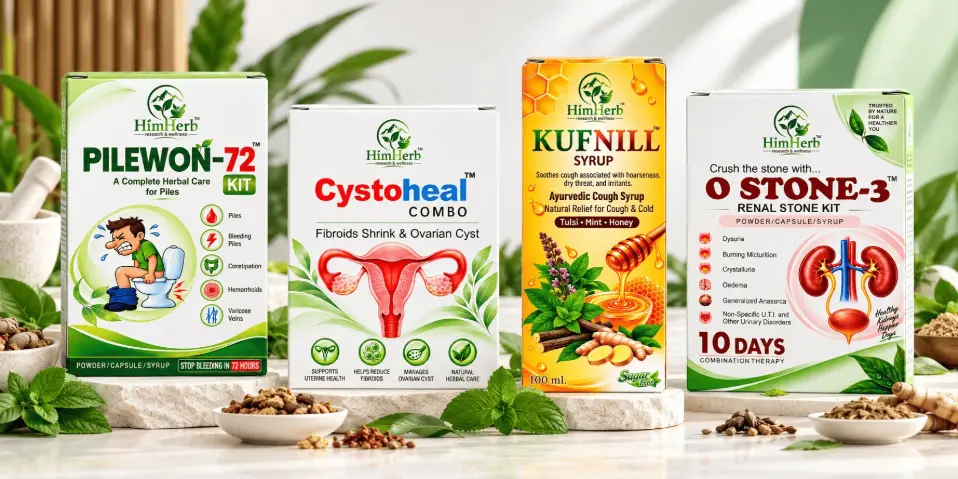
Packaging and illustration control
The four 3D-style product cartons shown on this preview are dummy visual representations for design evaluation only. They must be replaced with actual approved box artwork, correct trade dress, legally required declarations, pack size, composition, warnings, manufacturer address, marketer details, licence information, batch and expiry presentation, and barcode or QR artwork before public launch. No one should use these illustrative images to make or print replacement labels. If genuine pack images are cropped or compressed for the website, keep mandatory warning text clear and avoid edits that misrepresent the approved product. Product visuals should not resemble government seals or create false certification impressions.
QR documents and laboratory references
If the company publishes batch reports from manufacturers or laboratories, it should have permission to share them and ensure that the documents correspond to the product, batch and claimed tests. Certificates, laboratory names, reference numbers and any accreditation statements must be genuine and within their permitted scope. Quality-report access can improve transparency but must not imply governmental approval of a batch, cure rates or superior clinical efficacy. Report files should be protected from unauthorized editing and organized under a retention policy. The public display of a certificate cannot replace the actual responsibilities of the legally responsible licensed manufacturer and marketer.
Final pre-publication validation
Before publishing the site, obtain sign-off for the registered corporate name, address, contact details, product names, licence information, manufacturing details, GMP statements, composition, strength, indication wording, dosage, storage instructions, contraindications, warning text and any clinical references. Confirm the source and current status of any logo, seal or certification. Test that the final QR code opens a report for the correct batch and cannot be changed by an unauthenticated user. Legal policies must describe the site's actual cookie, analytics, hosting and enquiry functions. The design preview is a working presentation, not evidence that these regulatory checks have been completed.
Ongoing review and clear accountability
Regulatory accuracy is not a one-time publication activity. Each product variation, label change, new manufacturing site, revised warning, new study citation or market expansion can affect what the website may appropriately say. Assign a responsible reviewer for product-level statements and another for legal and technical website controls. Maintain the signed approval date and source document for each significant claim. If a pack or manufacturing document supersedes older information, replace the affected text and confirm that brochures, QR destinations and product pages remain consistent. Visitors should be able to request clarification without encountering exaggerated promotional language.
Public display of regulatory documents
If the company later displays a scanned licence or certificate, the image must be current, complete where necessary, clearly attributed and lawful to publish. Do not crop out limitations, validity dates, conditions or the identity of the actual holder while retaining a prominent approval-looking symbol. Where a regulator provides a public verification system, use the official reference without impersonating the regulator's site. Do not create a graphical government seal merely to improve the premium appearance of the page. If a certification changes or expires, remove or update the public claim promptly. These principles protect professional credibility and avoid confusing patients or business partners.
HIMHUB, COMPANY INFORMATION
Terms & Conditions
For questions about the website policies, contact himherbresearch@gmail.com